Introduction to Collaborating Physician Agreements

Collaborating Physician Agreements are formal agreements between physicians that Artikel the terms and conditions of their professional relationship when working together to provide patient care. These agreements are essential in the medical field to ensure clear communication, defined roles, and accountability among healthcare providers.
Importance of Collaborating Physician Agreements
- Establishing clear expectations: Collaborating Physician Agreements help define each physician's responsibilities, scope of practice, and decision-making authority, reducing confusion and potential conflicts.
- Promoting patient safety: By clearly outlining protocols, communication procedures, and quality assurance measures, these agreements contribute to a safer and more coordinated patient care environment.
- Legal protection: Having a formal agreement in place can protect physicians from liability issues that may arise during collaborative practice, providing a legal framework for resolving disputes or issues.
Scenarios where Collaborating Physician Agreements are Necessary
- Telemedicine collaborations between specialists and primary care physicians to coordinate care for complex patients.
- Physician assistants working under the supervision of a physician in a clinical setting to provide patient care within their scope of practice.
- Consultations between different medical specialties for complex cases that require multidisciplinary expertise.
Key Components of Collaborating Physician Agreements
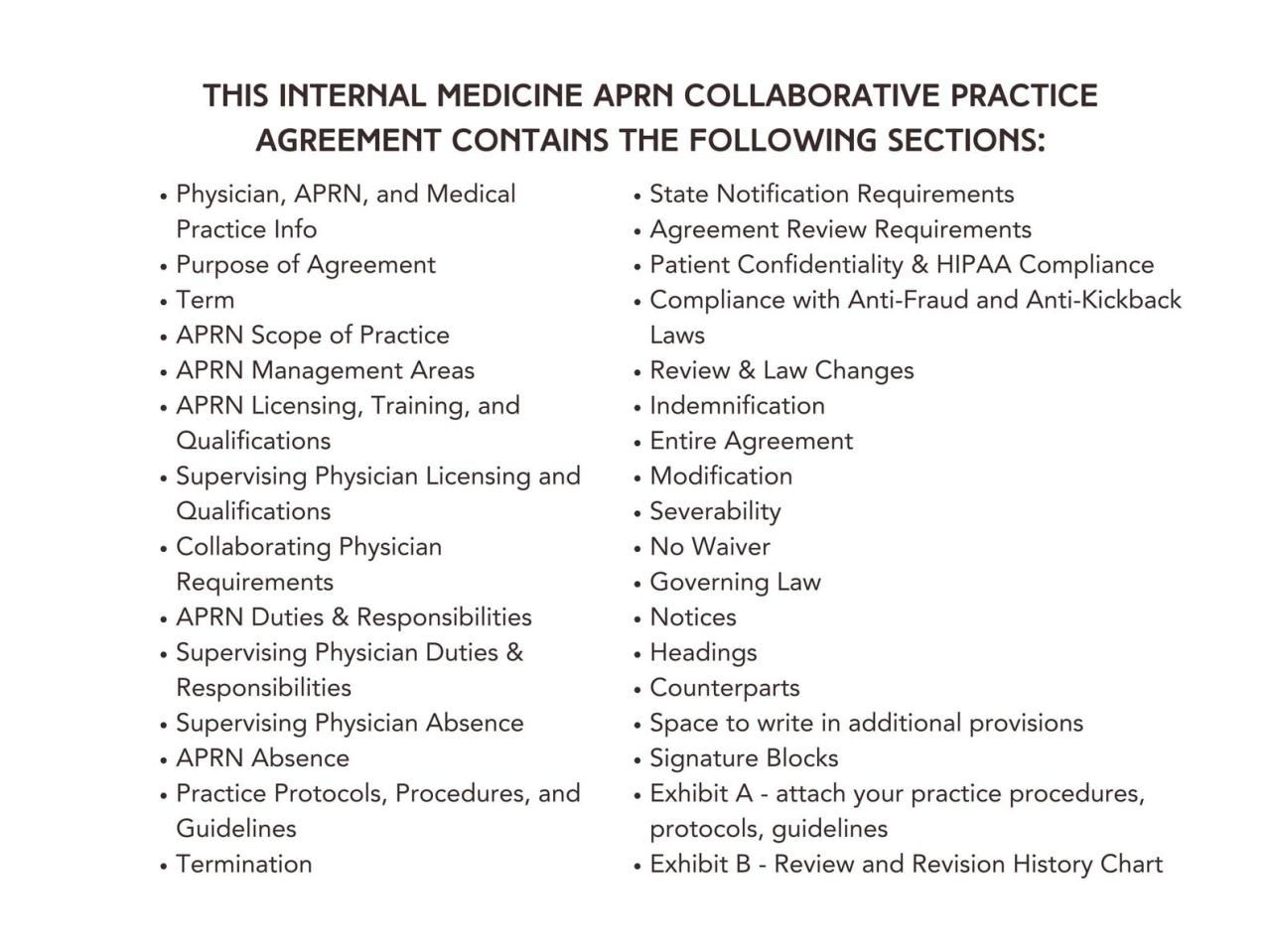
Collaborating Physician Agreements are essential documents that Artikel the terms and conditions under which physicians can work together to provide quality patient care. These agreements help establish clear guidelines for collaboration and ensure that all parties involved understand their roles and responsibilities.
Essential Elements
- Scope of Collaboration: Clearly define the scope of the collaboration, including the specific services or tasks that each physician will be responsible for.
- Duration of Agreement: Specify the duration of the agreement and any renewal options that may be available.
- Liability and Malpractice Insurance: Artikel the liability and malpractice insurance requirements for each physician involved in the collaboration.
- Termination Clause: Include a termination clause that Artikels the conditions under which the agreement can be terminated by either party.
- Compliance with Laws and Regulations: Ensure that the agreement complies with all relevant laws and regulations governing physician collaboration.
Roles and Responsibilities
- Primary Physician: The primary physician is responsible for overseeing the patient's care and coordinating with other healthcare providers.
- Collaborating Physician: The collaborating physician provides consultation and assistance to the primary physician in delivering patient care.
- Patient Care: Both physicians have a shared responsibility to ensure that the patient receives high-quality care that meets the standard of practice.
Ensuring Quality Patient Care
Collaborating Physician Agreements play a crucial role in ensuring quality patient care by establishing clear guidelines for collaboration, defining roles and responsibilities, and promoting effective communication between physicians. By outlining expectations and standards of care, these agreements help minimize errors, improve coordination, and ultimately enhance the overall quality of healthcare services provided to patients.
Legal Implications and Compliance Requirements
When it comes to collaborating physician agreements, understanding the legal implications and compliance requirements is crucial for all parties involved. Failure to comply with these legal aspects can result in serious consequences, including legal action and penalties. Let's delve into the details.
Legal Aspects of Collaborating Physician Agreements
Collaborating physician agreements are legally binding contracts that Artikel the terms and conditions of the collaboration between physicians. These agreements typically cover important aspects such as scope of practice, responsibilities of each party, patient care protocols, and confidentiality agreements. It is essential for physicians to ensure that these agreements comply with state and federal laws governing healthcare practices to avoid any legal disputes.
Compliance Requirements for Physicians
Physicians must adhere to various compliance requirements Artikeld in collaborating physician agreements to ensure the smooth functioning of the collaboration. These requirements may include maintaining proper documentation, following established protocols for patient care, ensuring clear communication between collaborating physicians, and adhering to all relevant laws and regulations.
Failure to comply with these requirements can not only jeopardize the collaboration but also lead to legal implications.
Implications of Non-Compliance
Non-compliance with collaborating physician agreements can have serious implications for physicians. It can result in legal disputes, loss of reputation, financial penalties, and even license suspension or revocation. Physicians must understand the importance of adhering to the terms of these agreements to maintain the integrity of the collaboration and uphold the highest standards of patient care.
Benefits of Collaborating Physician Agreements

Collaborating physician agreements offer a wide range of benefits for both primary physicians and collaborating physicians. These agreements help foster a collaborative environment, improve patient care, and enhance overall practice efficiency.
Enhanced Patient Care
- By working together through a collaborating physician agreement, primary and collaborating physicians can provide more comprehensive and coordinated care to patients.
- Collaborating physicians can offer their expertise in specific areas, leading to better treatment outcomes and overall patient satisfaction.
Promotion of Teamwork
- Collaborating physician agreements encourage teamwork and communication among healthcare providers, leading to a more cohesive approach to patient care.
- Primary physicians can benefit from the additional support and knowledge provided by collaborating physicians, resulting in better decision-making and improved patient outcomes.
Efficiency and Resource Utilization
- By sharing responsibilities and resources, primary physicians can optimize their time and focus on providing quality care to a larger number of patients.
- Collaborating physicians can assist with tasks such as follow-up appointments, consultations, and procedures, reducing workload and improving practice efficiency.
FAQs
What are the key components of Collaborating Physician Agreements?
The key components include identifying roles, responsibilities, and ensuring quality patient care.
What are the legal implications of non-compliance with these agreements?
Non-compliance can lead to legal repercussions and jeopardize patient care.
How do Collaborating Physician Agreements benefit primary physicians?
These agreements enhance teamwork, efficiency, and overall patient care for primary physicians.